Experiences, reflections and what I keep learning
Articles on programming, mathematics and AI with an analytical eye.
18 articles across all areas
Page 1 of 3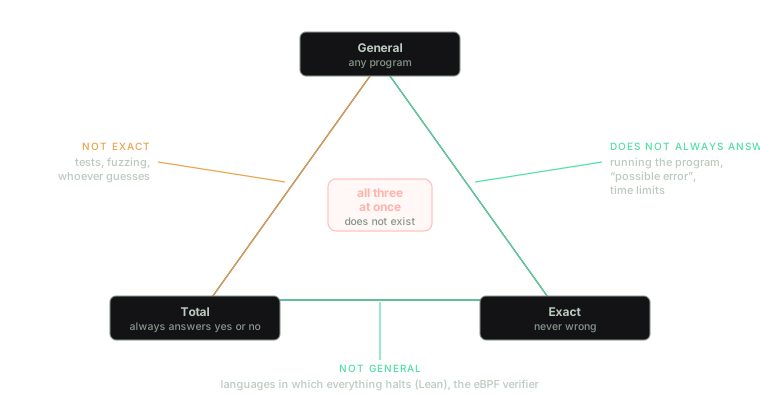
The halting problem: exactly what it rules out, and what it doesn't
In 1936 Alan Turing proved that no algorithm can decide, for every program, whether it finishes or runs forever. What that result actually says, how to prove it in ten lines of Python, what it doesn't say, why it follows that almost no question about what a program does has a general algorithm, how compilers, verifiers and tests get around it every day, and why people don't escape it either.
Sandboxes for AI agents: why the model is not the boundary
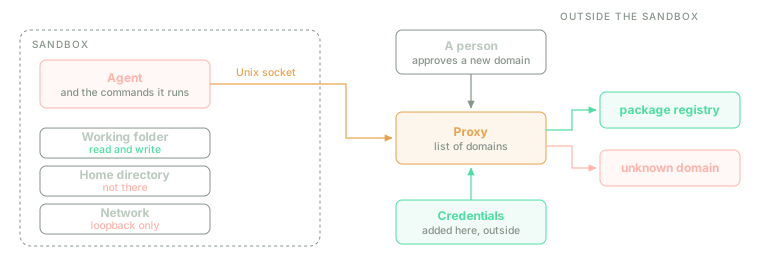
A coding agent reads a README with a hidden line, runs the command it asks for, and your private key leaves the machine. Why an agent is code nobody has reviewed, what the lethal trifecta is, how code interpreters, local agents, computer-use agents and cloud agents are isolated today, how to design the policy (files, network, secrets, resources and approvals), a bubblewrap example, and what no sandbox solves.
What a sandbox is, what it isn't, and when you need one
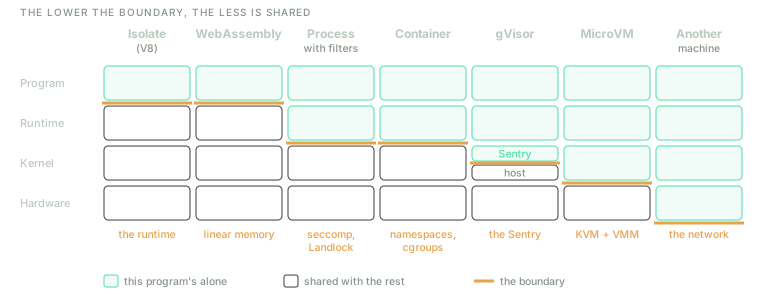
Every web page you open runs a stranger's code, and nothing happens because something that code can't touch decides what it's allowed to do. What a sandbox is, where the idea comes from, where the boundary can go (in the language, the process, the kernel or the hypervisor), what each option costs and when to pick it, what gets called a sandbox without being one, and when you don't need one at all.
Memory for agents: what to keep, how to read it, and whether you need all that
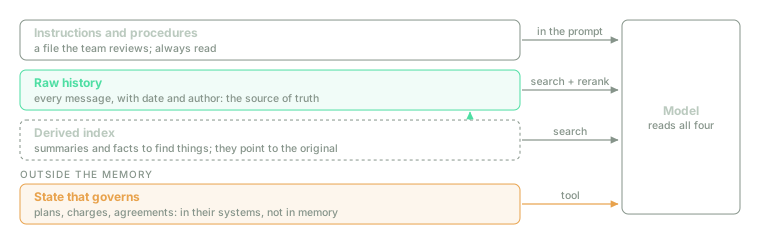
An assistant with memory says a customer is still within the refund window, citing what it was told in March, and misses what it was told in June. Why an agent needs memory, the four kinds cognitive science distinguishes, how a memory system works under the hood, how the field has evolved since 2023, how memory is measured, and why an October 2026 paper found that searching conversations as they are, without transforming them, beats twelve far more complex systems.
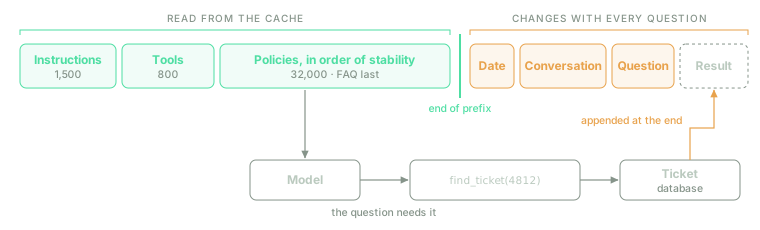
Cache-augmented generation (CAG): when you don't need to search
An assistant with a search engine quotes the general refund rule and gets it wrong, because the rule for the customer's plan sat in a fragment it never found. What cache-augmented generation (CAG) is, how the KV cache makes it cheap to hand the model every document, what the paper that named it measured, where it breaks, and when it beats searching.
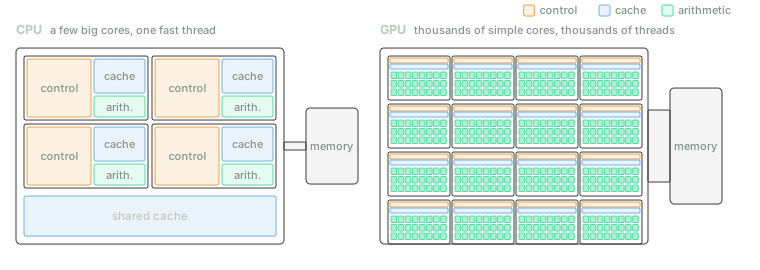
Why a chip designed for video games trains language models
In 1999 the GPU was born to multiply every vertex in a video game by a 4×4 matrix; today it trains language models with 405 billion parameters. Why video games needed a chip of their own, why a language model does essentially the same operation, why the CPU isn't enough for either, how training a model differs from using it, and why history is repeating itself with chips built only for AI.
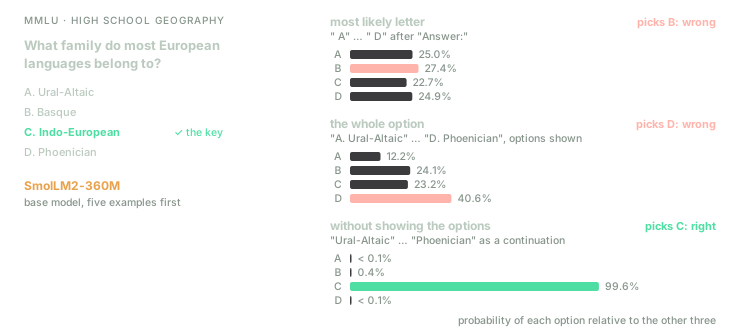
Same exam, three scores: what a benchmark really measures
The same model, on the same 14,042 MMLU questions, scores 63.6% or 48.8% depending on how its answer is read. This article looks inside a fixed-answer benchmark, compares three ways of reading what a model answers, shows what moves the score without touching the model (option order, prompt format, having seen the exam, the number of questions) and lists what to ask before trusting the figure on a model card.
Articles 1–7 of 18
Sign in to be notified when a new article goes up